Feeling Disconnected From Your Partner — What Is Really Happening and What to Do About It
You are in the same room. Maybe the same bed. The same house you have shared for years. And yet something is off — a distance between you that is hard to name and harder to bridge.
It is not a crisis, exactly. You have not had a dramatic argument. Nobody has done anything unforgivable. You still love them. You are fairly sure they still love you. But the ease that used to exist between you — the warmth, the sense of being genuinely known, the feeling of being on the same team — has quietly retreated. And you are not entirely sure when it happened, or why, or what to do about it.
Feeling disconnected from a partner is one of the most common experiences in long-term relationships. It is also one of the loneliest — partly because it is invisible, and partly because it is so easy to convince yourself it does not count as a real problem when nothing has obviously gone wrong.
It counts. And it is worth understanding what is actually behind it.

What Disconnection Actually Feels Like
Relationship disconnection does not always announce itself clearly. It tends to arrive gradually — a slow accumulation of small moments where something was missed, or not quite landed, or quietly absorbed into the logistics of shared life.
You might recognise it in some of these:
Conversations that cover the surface but never quite arrive. You talk about the children, the diary, the thing that needs fixing. You have whole evenings of perfectly functional exchange. And afterwards you feel, somehow, like you have not actually spoken to each other at all.
Physical proximity that does not feel like closeness. You are near each other constantly. But the warmth that used to exist in that nearness — the ease, the comfort, the specific sense of being with this particular person — has faded into something more neutral.
The sense of being more alone with them than without them. This is one of the most disorienting experiences a relationship can produce. Loneliness inside a relationship feels different from ordinary loneliness. It carries a particular ache — because the person who is supposed to be the antidote to it is right there, and still somehow not reaching you.
Going through the motions. The relationship functions. The household runs. From the outside, everything looks fine. But from the inside, something is being performed rather than felt.
Conflict that goes nowhere — or no conflict at all. Either the same argument keeps repeating without anything shifting, or you have both stopped bothering to raise things because the effort does not seem worth it. Both are forms of disconnection.
Not knowing how to cross the gap. You can feel the distance. You might even want to close it. But something stops you — you do not know what to say, or you are not sure you will be met, or the habit of not quite reaching has become too established to easily break.

Why Disconnection Happens — and Why It Is Rarely Just About the Present
When people look for explanations for feeling disconnected, they tend to focus on recent events — the stress of the past few months, the busyness, the argument that did not fully resolve. These things matter, and they contribute.
But relationship disconnection rarely comes from nowhere. Underneath the surface-level causes, there are almost always deeper patterns — patterns that have been present for much longer than the current period of distance, and roots that often go back well before this relationship began.
The pain felt when disconnected from a partner is not a sign that something is wrong with you. It is a sign that the attachment system is working exactly as designed. The same system that learned in childhood whether closeness is safe, whether love is reliable, whether expressing a need leads to connection or withdrawal — that system is active in every intimate relationship you have as an adult.
When disconnection occurs in a relationship, it does not only activate the present. It activates everything the nervous system learned about love, closeness, and what happens when connection is lost. Which is why the feeling can be so much larger than the immediate situation seems to account for.
The Pursue-Withdraw Cycle — and Why Both People Feel Like the Other One Is Pulling Away
One of the most common and most painful patterns in disconnected relationships is what therapists call the pursue-withdraw cycle. It goes like this:
One person feels the distance and moves toward their partner — seeking reassurance, wanting to talk, needing more connection. This reaching can sometimes come out as frustration or criticism rather than vulnerability, because underneath the frustration is fear.
The other person receives that reach as pressure — as something overwhelming, or demanding, or threatening to their sense of self. Their response is to withdraw — to go quiet, get busy, create physical or emotional space.
The withdrawal activates the first person's fear more intensely. They pursue harder. The pursuit activates the second person's need for space more intensely. They withdraw further.
Both people end up feeling the same thing: that the other person is pulling away. Both are waiting for the other to close the gap. Both believe they are on opposite sides. But in reality both are drowning in the same pain, isolated in their own separate suffering — the disconnection created not by either of them alone, but by the cycle between them.
This cycle almost always has roots in attachment. The pursuer is typically someone whose anxiety about abandonment is activated by distance — often connected to early experiences of inconsistent care. The withdrawer is typically someone for whom closeness triggers overwhelm — often connected to early experiences of love that felt suffocating, or caregivers who could not handle emotional intensity. Neither response is a flaw. Both are learned adaptations. But they fit together in a way that can feel impossible to break from the inside.
When Disconnection Is Coming From Inside You
Sometimes disconnection in a relationship is not primarily about the relationship at all. It is about what one person is carrying — and how that is showing up in the space between them.
If you are someone who finds genuine intimacy difficult — who has always had a slight resistance to being fully known, who gets uncomfortable when relationships become very close, who notices a pulling back at the moments of greatest vulnerability — the disconnection in your relationship may partly be of your own making. Not consciously. Not because you do not want connection. But because closeness activates something that the nervous system learned, very early, to be cautious about.
Similarly, if you are carrying something heavy — anxiety, depression, the unprocessed weight of past experiences — that weight does not stay contained. It shows up in the relationship as distance, as flatness, as an inability to be fully present with the person you love. What one person is carrying internally can show up as relational distance without either partner realising what is actually happening.
Understanding this is not about assigning blame. It is about being honest with yourself about your own part in the dynamic — because your part is the only part you can actually do anything about.
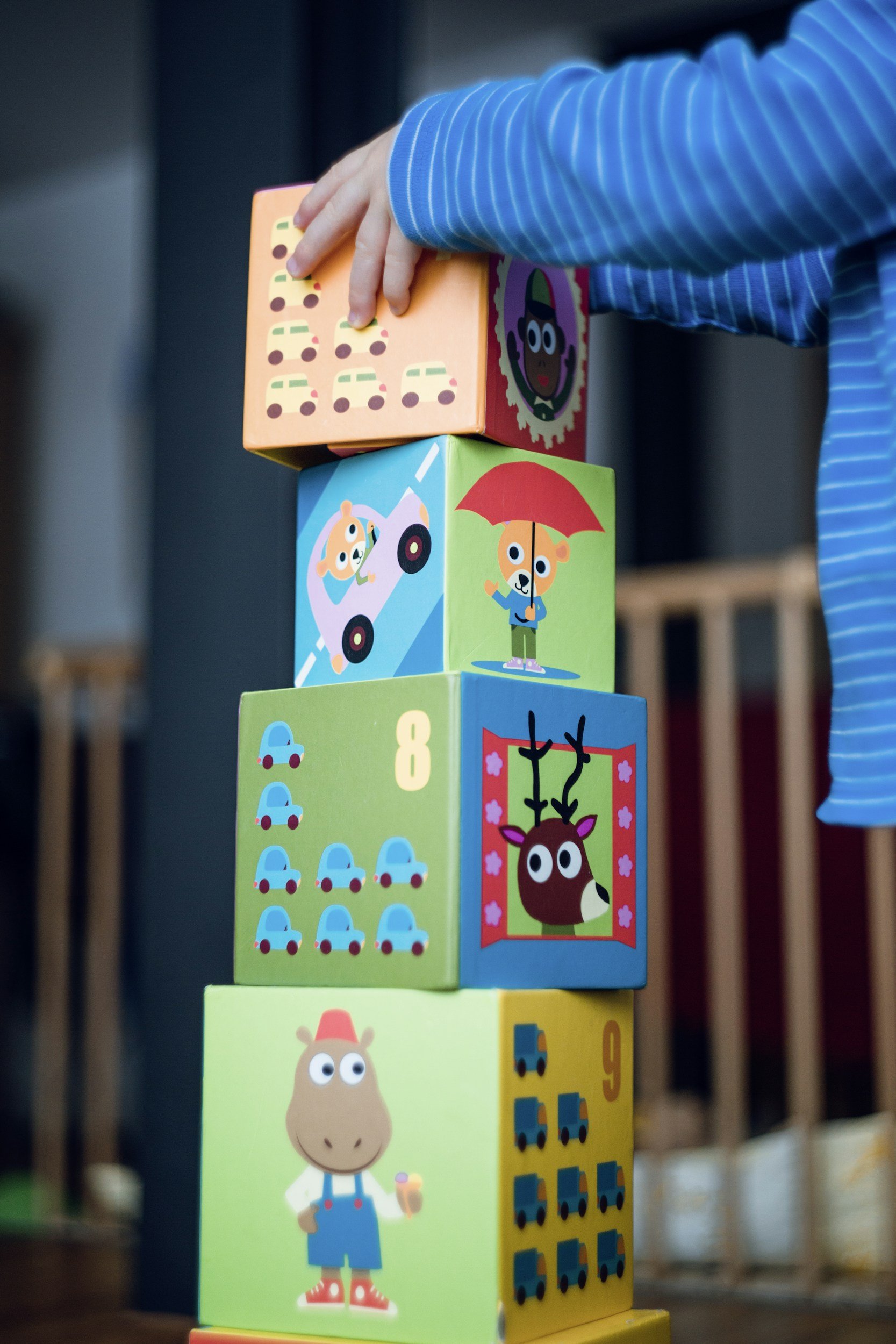
The Childhood Roots of Relational Disconnection
How available you are for genuine connection in your adult relationships is shaped — more than most people realise — by what connection looked and felt like in your earliest relationships.
If you grew up in a home where emotional closeness was inconsistent — where love was warm sometimes and withdrawn others, where the emotional temperature was unpredictable — your nervous system learned that closeness is uncertain and that you need to monitor it carefully. As an adult, you may pursue connection anxiously, or feel the distance in your relationship acutely, or find the uncertainty of disconnection genuinely threatening rather than simply uncomfortable.
If you grew up in a home where emotional closeness felt overwhelming or invasive — where a parent's neediness required you to manage their feelings, or where there was not much space for your inner world — your nervous system may have learned that closeness is something to be careful about. As an adult, the intimacy of a close relationship may feel like it crowds you. Your withdrawal may not be a choice — it may be a deeply conditioned response to something that feels like too much.
If you grew up in a home where emotional expression was not modelled, where feelings were not talked about, where connection happened through doing rather than being — you may find the specific language of intimacy difficult. Not because you do not feel things but because you were never taught how to bridge the gap between inner experience and shared expression.
None of this is destiny. These patterns formed in specific conditions. They can be understood — and in a therapeutic relationship that offers something different, they can gradually shift.
What Does Not Help — and What Does
The most commonly offered advice for relationship disconnection tends toward the practical — more date nights, more communication, more deliberate time together. These things are not wrong. They can create the conditions for reconnection, and small moments of turning toward each other matter more than people think.
But they do not reach the roots. And for people whose disconnection has deeper origins — in attachment patterns, in what they bring from childhood, in the specific dynamic that has developed between them — surface-level solutions tend to produce surface-level results. You have a good evening together and the distance returns by Tuesday.
What tends to actually help is understanding — not just what is happening, but why. What the disconnection is made of. What each person's part in it is. What the pattern is rooted in, and what it would take to genuinely change it rather than temporarily patch it.
This is work that sometimes happens in couples therapy — when both people are willing to engage. But it also, importantly, happens in individual therapy — where one person does the work of understanding their own contribution to the dynamic, their own attachment patterns, their own part of the cycle. Individual therapy can sometimes help a relationship even when couples work is the ultimate goal — because the change one person makes in how they show up is enough to disrupt the cycle for both of them.

If This Has Resonated
If you have recognised your relationship in this — the distance, the going through motions, the sense of something that used to be there no longer being quite accessible — that recognition is worth following.
You do not need to be in crisis. You do not need your partner to be on board. You just need to be honest with yourself that something is missing — and that understanding your part in it is a meaningful place to start.
I offer a no-obligation 20-minute consultation call — a chance to talk, ask anything you need to, and get a sense of whether working together might be right for you.
Mina Murat Baldwin MSc, MBACP, PGDip. I am a BACP registered integrative psychotherapist specialising in childhood trauma, relationship difficulties and low self-esteem. I offer online therapy across the UK and in-person sessions in Harrogate, North Yorkshire.
This article is intended for general informational and reflective purposes only. It is not therapeutic advice, and reading it is not a substitute for working with a qualified mental health professional. If you are struggling with your relationships or emotional wellbeing, I offer a 20 minute initial consultation to explore how we could work together. Please consider reaching out to get support that is tailored to your individual circumstances.
