Childhood Trauma Therapy Online UK | Trauma Counselling
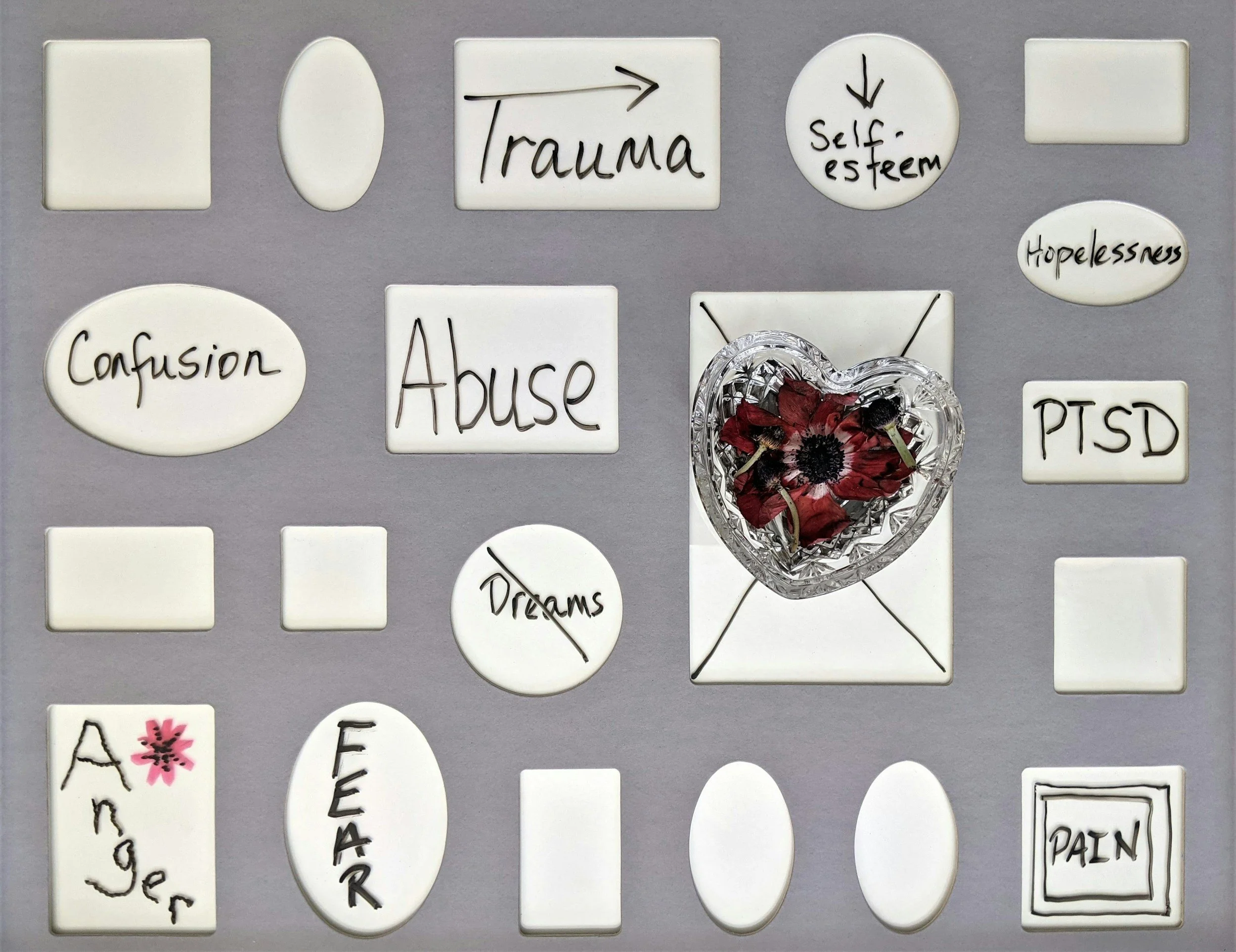
Childhood trauma doesn't always look the way people expect it to. It isn't only about dramatic or obviously terrible events. Sometimes it is the absence of things — of safety, of attunement, of being truly seen and responded to.
Sometimes it is growing up walking on eggshells, learning to make yourself small, or never quite knowing what version of a parent you were going to get. Sometimes it is about emotional neglect — not about what was done to you, but what was consistently absent; the attunement, the emotional safety, the steady love that every child needs to develop a secure sense of themselves and the world.
Adverse childhood experiences (ACEs) don't have to be dramatic to leave a lasting mark, and for many people, the result in adulthood can be what is now recognised as complex PTSD or CPTSD — a pattern of difficulties that go deeper than a single traumatic event, and that quietly shape every area of life.Whatever form it took — if it happened during the years when you were still learning who you were and whether the world was safe — it leaves a mark.
You may not think of yourself as someone with trauma. You may just know that certain things are harder than they should be.
You might recognise some of these:
Relationships feel unsafe, unpredictable, or exhausting — even when nothing is technically wrong
You find yourself people-pleasing, over-apologising, or shrinking yourself to keep the peace
Anxiety follows you everywhere — into decisions, conversations, the middle of the night
You struggle to trust people, including yourself
You feel disconnected from your own emotions, or feel numb in ways you can't explain
You keep replaying the same patterns across different relationships, different jobs, different versions of your life
You carry a deep sense of shame or feeling of not being enough and you can't seem to reason your way out of
A difficult or painful childhood is still shaping how you see yourself, relate to others, and move through the world
These are not character flaws. They are adaptations — things you learned to do to survive in an environment that wasn't safe enough, consistent enough, or loving enough. They made sense then. They are just getting in the way now.
How Childhood Trauma Shows Up in Adult Life
Not all childhood trauma is visible. Childhood emotional neglect — growing up in a home where your emotional needs were consistently unmet, where you were overlooked, dismissed, or simply not seen — can be harder to name than abuse that was physical, but its effects in adulthood are just as real.
Many adults who experienced emotional neglect don't think of themselves as having experienced trauma. They minimise it: "Nothing terrible happened. I wasn't beaten. We had holidays." But the absence of attunement — of being truly known and responded to by the people who were supposed to care for you — leaves its own kind of wound.
This can often be at the root of what is recognised as complex PTSD or CPTSD: a pattern of difficulties that can include emotional dysregulation, chronic shame, a fractured sense of self, and difficulties in forming and sustaining relationships. Unlike single-incident PTSD, complex trauma develops over time — often over years of childhood experience — and it requires a different kind of therapeutic response.
If any of this resonates, you are in the right place.
Childhood Emotional Neglect and Complex PTSD
Childhood trauma therapy is not about reliving the past in painful detail. It is not about being made to talk through things you are not ready for, and it is not about blaming your parents or your family.
It is about understanding the connection between what happened then and how you live now — and, over time, loosening that connection so that the past has less power over the present.
As a trauma-informed therapist, I work at a pace that is always yours. I draw on person-centred, psychodynamic and attachment-based approaches, tailoring our work entirely around you — not applying a fixed programme by default.
In our work together, we might explore:
The patterns and dynamics from your early life that are still showing up today
How your nervous system learned to protect you — and how those protective responses are now affecting your relationships and your sense of self
The effects of childhood emotional neglect on your capacity for intimacy, trust, and self-worth
The roots of CPTSD symptoms — the shame, the hypervigilance, the emotional flooding or numbness
How you relate to yourself: the inner critic, the relentless self-doubt, the feeling of never being enough — all of which so often trace back to early experience
Nothing happens before you are ready. Every session moves at your pace.
What Childhood Trauma Counselling Actually Involves
For some people, there are specific events or memories that remain raw, intrusive, or frightening — flashbacks, nightmares, or a sense of being pulled back into the past without warning.
For this kind of trauma response, I am trained in the Rewind Trauma Technique — a gentle, evidence-based approach to trauma and PTSD that works without requiring you to describe or relive what happened in detail. It is one of the few trauma approaches that does not ask you to go back through the worst of it to find relief from it.
Many clients describe it as one of the most quietly powerful experiences of their therapeutic work. It puts you in control of the process from beginning to end, and it can bring significant relief from intrusive trauma symptoms that have been present for years.
The Rewind Trauma Technique for PTSD and Complex Trauma

Why Work With Me
My background is unusual for a therapist in private practice. I have published peer-reviewed academic research on childhood maltreatment — meaning my understanding of trauma goes beyond clinical training to a research-level depth. I spent years in the NHS as a Senior Practitioner delivering CBT based therapy, where I learned that structured programmes are not enough for everyone — that some people need depth, relationship, and a space built entirely around them.
I am trained in the Rewind Trauma Technique for PTSD and complex trauma, and I work integratively — drawing on person-centred, psychodynamic and attachment-based approaches, tailored entirely around you rather than applied by default.
I am a BACP registered psychotherapist. I am warm and direct. I will not simply listen and nod — I will work actively alongside you toward something that lasts beyond the session.
You do not need to have the words for it yet. You do not need to be certain, or to arrive with a clear explanation of what went wrong.
Reaching out is enough.
I offer a no-obligation 20-minute consultation call — a chance to make contact, ask anything you need to, and get a sense of whether working together feels right.
Ready to Start? Book a Consultation
Mina Murat Baldwin MSc, MBACP, PGDip — BACP registered integrative psychotherapist. Therapy for anxious attachment, avoidant attachment, disorganised attachment and relational patterns rooted in early experience. Online across the UK and in person in Harrogate, North Yorkshire.
This article is intended for general informational and reflective purposes only. It is not therapeutic advice, and reading it is not a substitute for working with a qualified mental health professional. If you are struggling with your relationships or emotional wellbeing, I offer a 20 minute consultation to explore how we could work together. Please consider reaching out to get support that is tailored to your individual circumstances.