Feeling Invisible and The Identity Loss in Motherhood
There is a version of this post that would reassure you that motherhood is a beautiful transformation, that you are not lost but evolving, that the woman you were is still there waiting to be rediscovered. That version exists in abundance. It is not what I am writing today.
What I want to write about is something more specific and more uncomfortable than identity loss in the general sense: the particular, quiet grief of feeling invisible — not just to yourself, but to the world, of moving through social life in a way that feels fundamentally different from before, and not entirely by choice.
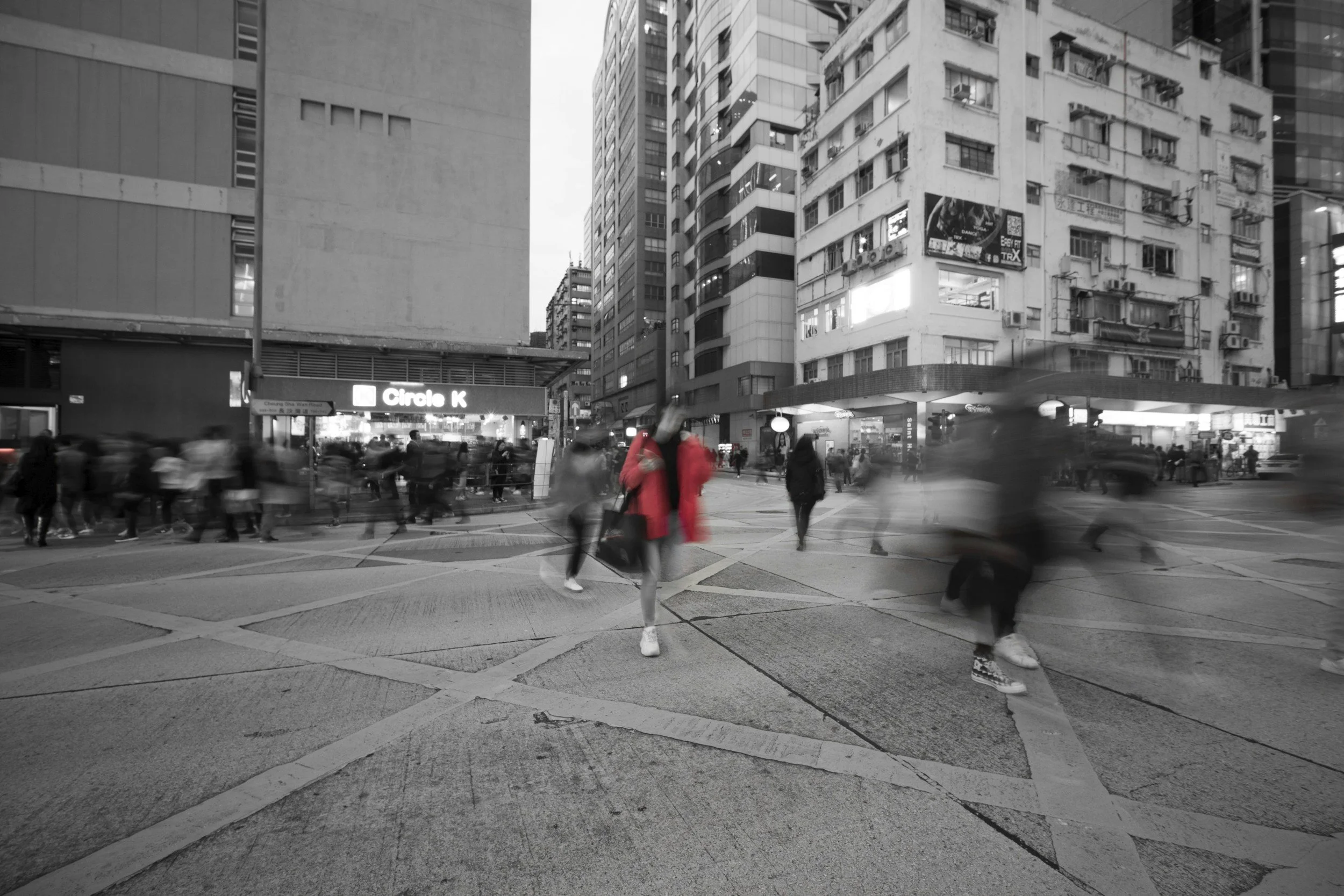
The World Reorganises Around You and Leaves You Out
Before you had a child, you existed in the world in a particular way. You moved through social spaces with a kind of freedom of being simply a person, rather than a person defined by a role. You could be funny, interested, interesting, provocative, professional, playful and maybe careless. You could be whatever the moment called for.
Something shifts after a baby arrives. The world begins to reorganise around your new status — and not always in ways that feel expansive.
You are now, in many contexts, primarily a mother. The conversations narrow. People who do not have children — who once were your friends, who you talked with late into the evening about everything and nothing — begin to feel like they are living in a different register. Not because they have changed. Because the gap between your daily reality and theirs has widened in a way that is hard to bridge without effort, and right now you do not always have the energy for the effort.
The friendships that might have formed — the chance encounters, the slow-building connections with interesting people you might have drawn into your life — feel harder to access. Not impossible but just different. There is less availability, spontaneity and less of the particular kind of free-floating social energy that friendships are built from, before children reorganise everything around logistics and bedtimes.

The Friendship Gap
One of the loneliest aspects of early motherhood is the way it creates a sudden and unexpected division in social life between the people who have children and the people who do not. This is not about who you prefer or who matters more. It is about availability, shared reference points, and the simple reality that the texture of life with a small child is so specific, so consuming and different from life without one that the gap can feel almost unbridgeable at times.
Friends without children are still your friends but the spontaneity that used to characterise those friendships — the last-minute plans, the evenings that stretched late, the conversations that went wherever they went — is now harder to access. You are often tired. You are often needed. You are often managing the logistics of keeping a small person alive, which does not leave much room for the particular kind of ease that close friendship requires.
The people who do have children — who might become friends, who might understand this specific and exhausting season — are often strangers. People you would never have met before amd whose company you find yourself in primarily because you share a postcode and a nursery, not because of any natural affinity.
There is often a loss of potential friendships with people who don't have children — and this is rarely named clearly enough. The loss is not of existing friends, exactly. It is of the friendships that will now not form: the interesting person at the party you used to be able to spend an hour talking to, the colleague you would have got to know properly, the friend-of-a-friend who seemed like your kind of person but whose life is running at a different speed from yours and the moment has already passed.
That is a real loss. And it is allowed to feel like one.
The Strange Loss of Being Seen
This is the part that is hardest to say and the part that feels most like it should not be said.
There is a particular kind of social visibility that many women carry — not something they necessarily seek, not something that defines them, but something that is simply part of how they move through the world: the awareness of being noticed, the low-level current of being found interesting, or attractive, or engaging, in the ordinary social currency of everyday life.
And then a baby arrives and something changes — quietly, unremarkably, without announcement — in how the world receives you.
Part of this is circumstantial. You are tired. You are often in clothes chosen for practicality. You are not inhabiting yourself in the loose, easy way you did before, because so much of your attention is directed outward — to the baby, to the needs, to the logistics. The self-possession that is part of what makes a person magnetic has been temporarily requisitioned.
But part of it is something more structural. The world has put you in a category: Mother. The category comes with warmth and respect — but it is not the same as being seen as a full, complex, desiring, desirous person in your own right. Something in how people interact with you has shifted. The register is different.
Here is the thing that is hardest to name: you are not looking for this. You are not looking for attention, or for validation, or for anything from anyone. You have a partner. You have a baby. Your life is full. But there is something about the awareness that a particular quality of social visibility has quietly diminished — not because you chose for it to go, but because the world reorganised without asking — that sits in you with a strange weight.
It is not vanity. It is something about selfhood. About being seen as a person first, not a role, about the particular quality of moving through the world as someone who is — in the full, complete, multidimensional sense — there.
Matrescence and The Transition
There is a word for what you are going through, though most people have never heard it.
Matrescence is the developmental process of becoming a mother — the physical, psychological, emotional and identity transformation that happens when a woman has a child. It is as significant and as seismic as adolescence. It remakes the self at a fundamental level and unlike adolescence, it happens with almost no cultural acknowledgement, no rites of passage, no explicit recognition that what is happening is a full and profound identity shift that deserves time, space, and support.
Many mothers experience identity loss after having a baby, feeling as though they are only allowed to be parents, partners, and professionals with no permission to be anything more. The problem is not that you have changed. Change was inevitable and some of it is extraordinary. The problem is that the change has happened largely in isolation — without the vocabulary to name what is being lost, without the permission to grieve it, and without the acknowledgement that feeling invisible is not ingratitude. It is an honest account of something real.

The Permission to Grieve What Has Changed
A 2023 study found that nearly two-thirds of new mothers felt like they had lost part of their identity since becoming a mother — yet many hesitate to talk about it, fearing judgment or guilt.
The fear of judgment is not irrational. The cultural script around motherhood is still, in many ways, the same one it has always been: you chose this, you wanted this, this is the most important thing you will ever do, you should be grateful. Within that script, grief for what has been lost sounds like complaint. Ingratitude. Not loving your child enough.
But you can love your child completely and still grieve the parts of yourself that are currently less available. You can be grateful for everything motherhood has given you and still feel the loss of things it has taken. Both things are true. They have always been true. They just do not tend to be said.
What the friendships that will not form deserve is acknowledgement. What the quiet diminishment of being seen deserves is acknowledgement. What the exhausted, temporarily disappeared version of yourself deserves — the one who used to move through the world so differently — is acknowledgement.
Not fixing. Not a ten-step plan for getting yourself back. Just the acknowledgement that something real is happening, that it makes complete sense, and that you are allowed to feel it.
When It Connects to Something Older
For some mothers, the experience of invisibility in motherhood connects to something that was already there — a pre-existing fragility around self-worth, around being seen, around the question of whether you are enough beyond what you provide and produce.
If your sense of value was already, in some way, conditional — if you learned early that your worth depended on being attractive, or capable, or useful, or pleasing — then the loss of the particular social visibility that motherhood can bring may land harder than it might for someone with a more stable internal foundation.
The invisibility of motherhood can reactivate old questions. Am I still interesting? Do I still matter? Is there a version of me that exists outside of what I do for other people? These are not new questions — they are questions that may have been circling long before the baby arrived, just with new and louder amplification.
Understanding that connection — between what you are feeling now and what might have always been quietly underneath it — is often where the most meaningful work happens.

If This Has Landed
If you have recognised yourself in this — the invisible quality of it, the grief for the things that will not now form, the particular strangeness of no longer moving through the world in quite the same way — that recognition matters.
You do not need to be in crisis. You do not need to wait until it gets worse. You just need to be honest with yourself that something is happening that deserves more than being pushed through.
Mina Murat Baldwin MSc, MBACP, PGDip. I am a BACP registered integrative psychotherapist specialising in childhood trauma, relationship difficulties and low self-esteem. I offer online therapy across the UK and in-person sessions in Harrogate, North Yorkshire.
This article is intended for general informational and reflective purposes only. It is not therapeutic advice, and reading it is not a substitute for working with a qualified mental health professional. If you are struggling with your relationships or emotional wellbeing, I offer a 20 minute initial consultation to explore how we could work together. Please consider reaching out to get support that is tailored to your individual circumstances.
